

common applications for medical flex circuits
The medical sector of the consumer industry relies on many electronic devices that require a high level of reliability. From medical flex circuits in hearing aids to heads-up displays for aerospace piloting, flexible printed circuit boards (PCB) are often used to improve performance and safety in various applications. Flex PCBs have thin substrates with impressive levels of flexibility, tensile strength, and bendability. Using them reduces overall device weight by eliminating the need for traditional wiring harnesses and ribbon connectors.
The emergence of smart wearables, medical devices, and implants is driving demand for advanced flex circuits. The health tech or med tech segment of electronics is expected to grow at a rapid pace over the next few years. Some examples of flex assemblies in the med tech category include electronic stethoscopes, remote patient monitoring devices, assistive devices, and smart patches.
These flex PCBs allow engineers to integrate multiple components into compact and lightweight devices that fit in or on the body for comfort and portability. They also support inter-device communication and a high level of connectivity. flex circuit also enable the insertion of flexible screens and displays. They’re able to achieve higher densities than rigid PCBs, thus making them suitable for medical device packaging and a cost-effective choice.
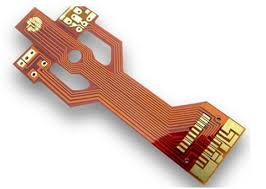
What are common applications for medical flex circuits?
For example, a medical company used a flex circuit to create an innovative hearing-assist device that can restore the sense of sound for patients with severe hearing loss. The flex circuit design allowed engineers to mount the microphone, digital signal processing (DSP), and battery components in a small package that fits behind the ear. This allows the device to transmit a laser beam into the ear canal, allowing it to interact with a photoreceptor and micro-actuator that stimulates the eardrum to recreate a sense of sound.
Other flex circuits are found in endoscopic and minimally invasive surgery devices, including catheters and endoscopic cameras. They’re also utilized in drug delivery systems to facilitate the controlled distribution of medications. They’re even used in surgical tools, such as robotic saws and cauterizing scissors.
The med tech industry is also looking into implantable flex circuits. Those that are being developed will likely have to meet strict regulatory requirements, including FDA approval and UL 94V-0 rating. This means that the flex circuits must be extremely thin with minimum conductive trace width and pitch dimensions to ensure that they can safely penetrate the human body. Thankfully, advancements in manufacturing processes are allowing manufacturers to reach these minute dimensions with extreme-resolution microflex technology.
Unlike other types of PCBs, rigid-flex circuits combine both rigid and flex boards in one design. This enables the creation of a system that eliminates cables and connectors between the hard boards. Rigid-flex PCBs by PCBSky are ideal for medical packaging and can save time by eliminating the need to design, test, and qualify separate rigid boards. They’re also suitable for a number of other electronic devices that must be compact, rugged, and highly reliable. The best thing about a rigid-flex PCB is that it can be designed to meet the specifications of the application with maximum efficiency.