

Lifespan of Flex Circuit Boards
The lifespan of flex circuit boards depends on many factors, such as the environment in which they are used, how often they are flexed and assembled, and how well they are stored. By addressing these factors and using proper storage and assembly techniques, manufacturers can maximize the lifespan of their flexible printed circuit board products.
Rigid PCBs are typically made from a base material that is comprised of woven fiberglass impregnated in epoxy resin. Although this provides rigidity, it also limits the elasticity of the board. Flex circuit boards are made from a base material that is much thinner and more flexible than this, such as a polyimide film. Unlike traditional rigid PCBs, the thickness of a flex circuit board allows it to bend and twist while still carrying signal and power.
Despite their innate flexibility, flex circuit boards are highly durable and can be flexed millions of times without breaking or losing functionality. This durability makes them ideal for a variety of applications, such as mobile devices, automotive and industrial products, and electrical connections within complex sub-assemblies.
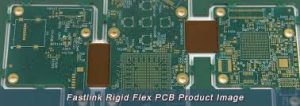
The Lifespan of Flex Circuit Boards
To create a flex circuit, the copper conductive layer is combined with a dielectric substrate and then etched in multiple layers to produce the desired PCB design. In addition, a solder mask is applied to prevent accidental electrical connections between different areas of the flex circuit. Depending on the application, the flex circuit may be laminated to a stiffener to relieve strain and balance weight, as well as improve heat dissipation, flexing, and abrasion resistance.
A flex PCB can be manufactured in an array of sizes, shapes and layers. In comparison to its rigid counterpart, a flex circuit can reduce overall product size by up to 75%. This comes from the use of incredibly thin materials that are as low as 12-120 microns thick. This makes it possible to design a flex circuit that fits into the space of your product and even enables you to bend and twist the board in various ways.
In addition to the thickness of a flex circuit, the conductors and routing pattern should be analyzed in order to determine how they will respond to repeated bending. Ideally, the conductors should be routed through bend areas as close to perpendicular as possible in order to minimize stress on the connectors.
A flex PCB can be finished with a variety of surface finishes, including thermally cured acrylic adhesives and pressure-sensitive adhesives. These finishes protect the copper from corrosion and oxidation, provide a solderable surface, and offer abrasion resistance. They can also be plated with a metal such as aluminum or stainless steel to provide structural support, increase heat dissipation, and improve the strength of solder joints. Lastly, the flex circuit can be laminated to a stiffener for additional stability and to prevent unwanted vibrations. Finally, the flex circuit can be manufactured using either panel plating or pad-only plating (button plating). The former involves coating the entire flex PCB with copper while the latter requires that only the copper be deposited on the pads and vias, creating a more stable structure.