

Detect Adversarial Attacks in AI Models
Detecting adversarial attacks in AI models is essential to ensure their robustness, reliability, and security. Adversarial attacks involve intentionally crafted inputs designed to manipulate AI models and cause them to produce incorrect or misleading outputs. These attacks pose significant threats in various applications, including image recognition, autonomous systems, fraud detection, and natural language processing. If not detected and mitigated, adversarial attacks can compromise the performance of AI systems, leading to security breaches, misinformation, and financial losses. Implementing effective detection techniques helps safeguard AI models against these vulnerabilities.
One of the primary methods to detect adversarial attacks is anomaly detection. AI models trained on clean datasets can be monitored for unusual patterns or deviations in input distributions. When an adversarial attack occurs, the input often differs subtly from normal data, causing the model to behave unpredictably. Anomaly detection techniques, such as autoencoders and statistical outlier detection methods, help identify adversarial inputs by measuring their distance from normal data distributions. By flagging anomalous inputs, AI models can either reject them or trigger additional verification processes before making a decision.
Another effective approach is adversarial training, where End-to-end testing platform for Al applications are exposed to adversarial examples during training to improve their resilience. By incorporating adversarial samples generated using attack techniques like the Fast Gradient Sign Method (FGSM) or Projected Gradient Descent (PGD), the model learns to recognize and resist manipulated inputs. During deployment, models trained with adversarial examples can better detect and mitigate attacks by recognizing patterns commonly used in adversarial perturbations. This proactive approach strengthens the model’s ability to distinguish between legitimate and adversarial inputs.
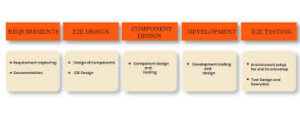
How Do You Detect Adversarial Attacks in AI Models?
Gradient-based detection methods analyze how adversarial perturbations affect model predictions. Adversarial attacks typically exploit gradients used in backpropagation to manipulate predictions subtly. By monitoring gradient behavior, researchers can detect inconsistencies indicative of an attack. If an input requires abnormally high gradient changes to produce a prediction, it may signal adversarial tampering. Defensive techniques like defensive distillation reduce sensitivity to gradient-based attacks by training the model to produce smoother decision boundaries, making adversarial manipulations less effective.
Another technique for detecting adversarial attacks is input preprocessing and feature analysis. Adversarial inputs often contain subtle distortions that may not be visible to humans but can disrupt AI predictions. Techniques such as noise filtering, image denoising, and Fourier transformation help analyze input features and detect adversarial modifications. If an input exhibits unnatural frequency components or noise patterns, it may indicate an adversarial attack. Additionally, ensemble models that compare predictions across multiple architectures can help detect inconsistencies caused by adversarial inputs.
Black-box detection techniques involve monitoring model confidence scores and decision consistency across different perturbations. In many adversarial attacks, the model’s confidence in its predictions fluctuates significantly. By analyzing confidence score variations across small input changes, AI systems can identify potential adversarial attempts. If a minor modification to an input causes a drastic change in the model’s prediction, it may indicate an adversarial attack. Threshold-based monitoring helps in flagging such irregularities, prompting further validation before finalizing predictions.
Detecting adversarial attacks in AI models requires a combination of anomaly detection, adversarial training, gradient-based analysis, input feature examination, and confidence monitoring. As AI continues to be integrated into critical applications, strengthening security measures against adversarial threats is vital. By continuously improving detection mechanisms and integrating robust defense strategies, AI developers can build resilient models capable of withstanding adversarial manipulations and ensuring trustworthy decision-making in real-world scenarios.


